Chemical protection
Creates a protective barrier between aggressive process media and the steel substrate.
Rubber lining installation, repair and replacement for tanks, vessels, pipework and process equipment exposed to corrosion, chemical attack and abrasion.
Ancorite provides industrial rubber lining services for steel tanks, vessels, pipework and process equipment operating in aggressive chemical and abrasive environments.
Correctly specified rubber linings create a durable barrier between the process media and the underlying steel substrate, helping to protect critical plant from corrosion, chemical attack and wear while extending operational life.
Rubber linings can also be used as membranes behind brick linings, providing an additional protective layer in demanding chemical, thermal and abrasive applications.
Ancorite installs both pre-vulcanised and post-vulcanised rubber lining systems, with material selection matched to the process media, operating conditions and requirements of the individual application.
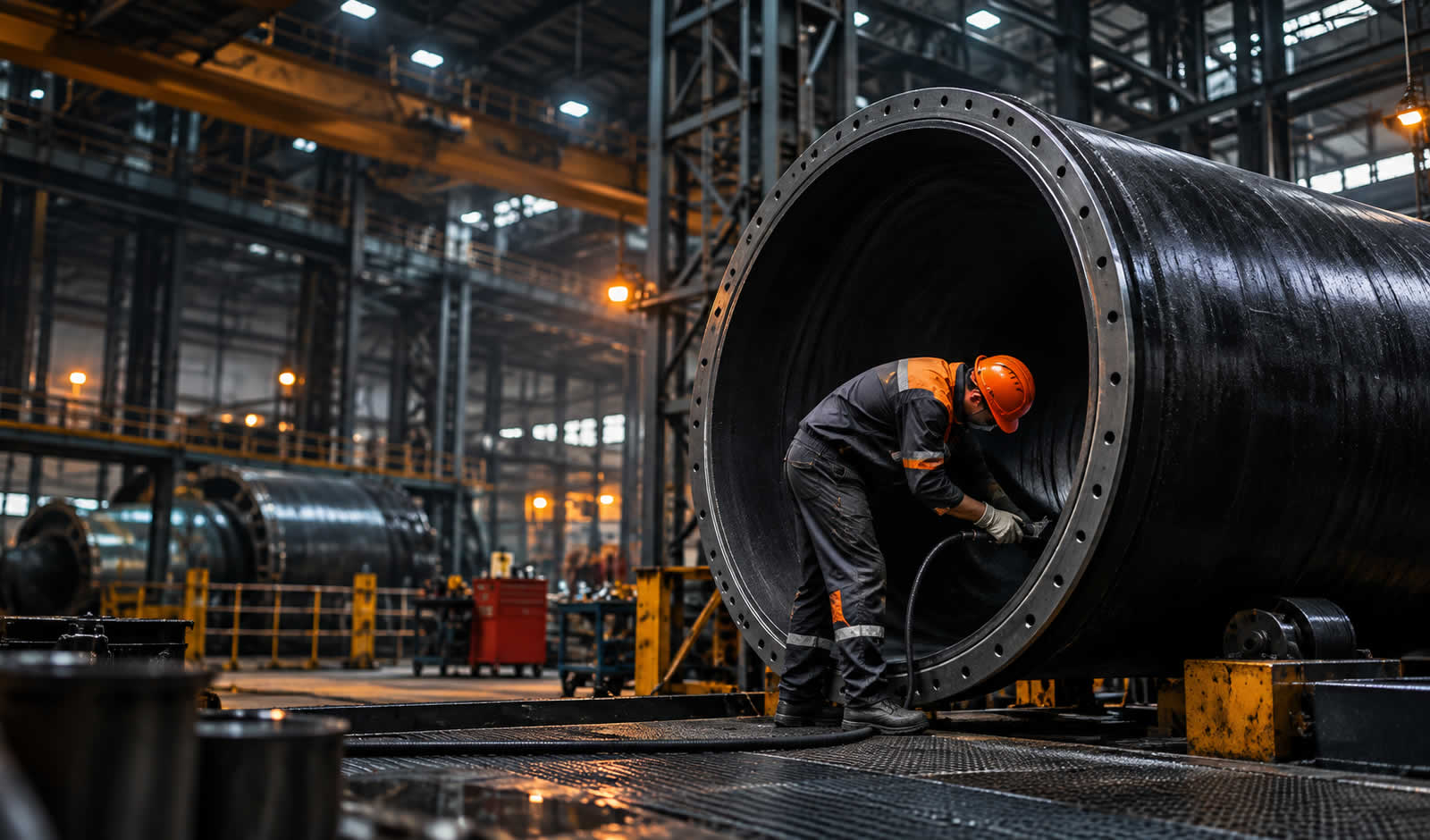
Rubber lining combines chemical resistance with abrasion resistance and flexibility, making it suitable for equipment exposed to aggressive media and movement in service.
Creates a protective barrier between aggressive process media and the steel substrate.
Helps protect tanks, vessels and pipework from corrosion and loss of containment integrity.
Provides protection where equipment is exposed to abrasive process conditions as well as chemical attack.
Rubber can accommodate movement, vibration and thermal expansion that may challenge more rigid lining systems.
Ancorite installs rubber lining systems across a range of industrial plant and process equipment where dependable corrosion and chemical protection is required.
Protective lining systems for steel tanks containing aggressive process media.
Rubber lining for vessels operating in demanding chemical and industrial environments.
Including ion exchange vessels and associated water and effluent-treatment equipment.
Protection for associated steel pipework and components exposed to corrosive media.
Rubber membrane systems can provide an additional protective barrier beneath specialist brick linings.
Removal of worn or failed lining systems followed by steel preparation and re-lining.
The appropriate rubber lining system depends on the equipment, process conditions, installation environment and performance requirements.
Pre-vulcanised materials are supplied in their cured state and bonded to suitably prepared steel surfaces. They can be suited to site applications where post-installation vulcanisation is not required.
Post-vulcanised systems are installed before curing. Ancorite provides workshop lining for smaller components requiring post-vulcanisation.
Ancorite can undertake on-site vulcanisation of soft natural rubber linings using site steam supplies or, where required, a temporary steam generator.
A successful lining project depends on correct system selection, thorough surface preparation and disciplined installation.
Review the equipment, process environment, service conditions and project constraints.
Remove existing worn or failed lining material where refurbishment is required.
Prepare the steel using shot blasting and mechanical preparation as appropriate.
Apply and bond the specified pre- or post-vulcanised rubber lining system.
Where required, cure the lining using the appropriate workshop or on-site process.
Existing rubber linings can be repaired or fully replaced as part of planned maintenance, plant refurbishment or shutdown work.
Ancorite can remove worn or failed rubber lining, prepare the underlying steel and install a replacement system to restore protection and extend the operational life of the asset.
Ancorite's experienced workforce is highly mobile, allowing teams to support planned maintenance, refurbishment and emergency shutdown projects across industrial sites.
Workshop capability is also available for smaller components requiring post-vulcanisation.
Ancorite Surface Protection is part of the Steuler Group and is an approved installer for the KCH-Steuler range of rubbers.
Ancorite has delivered rubber lining projects across the power generation, chemical, petrochemical and metals-processing industries, supporting new installations, planned maintenance and refurbishment work.
Regional operations in Sandbach, Beverley and County Mayo support project delivery across the UK and Ireland.
Straightforward answers to common questions about rubber lining installation, repair and refurbishment.
Industrial rubber lining creates a protective barrier between steel equipment and aggressive process media. It is commonly used to protect tanks, vessels, pipework and associated components against corrosion, chemical attack and abrasion.
Typical applications include storage tanks, process vessels, water-treatment ion exchange vessels, pipework and associated steel components. Rubber can also be used as a protective membrane behind specialist brick linings. Suitability depends on the equipment, process media and operating conditions.
Pre-vulcanised rubber has already undergone the vulcanisation process before installation. Post-vulcanised systems are installed before curing and then vulcanised to develop their final properties. The appropriate approach depends on the application and installation environment.
Yes. Existing worn or failed rubber lining can be removed, repaired where appropriate, or fully replaced. The underlying steel is prepared before the replacement system is installed as part of maintenance, refurbishment or shutdown work.
Yes. Ancorite can carry out on-site installation and can vulcanise soft natural rubber linings using either available site steam or a temporary steam generator where required.
Yes. Ancorite provides workshop lining services for smaller components, including applications requiring post-vulcanisation.
Selection depends on factors including the process media, chemical exposure, operating temperature, abrasion, mechanical conditions and the equipment being protected. The lining system should be matched to the requirements of the individual application.
Ancorite supports industrial rubber lining projects across the UK and Ireland, with regional operations including Sandbach in Cheshire, Beverley in East Yorkshire and County Mayo in Ireland.
For new installations, refurbishment, maintenance or shutdown work, speak to Ancorite about the equipment, operating environment and project requirements.